
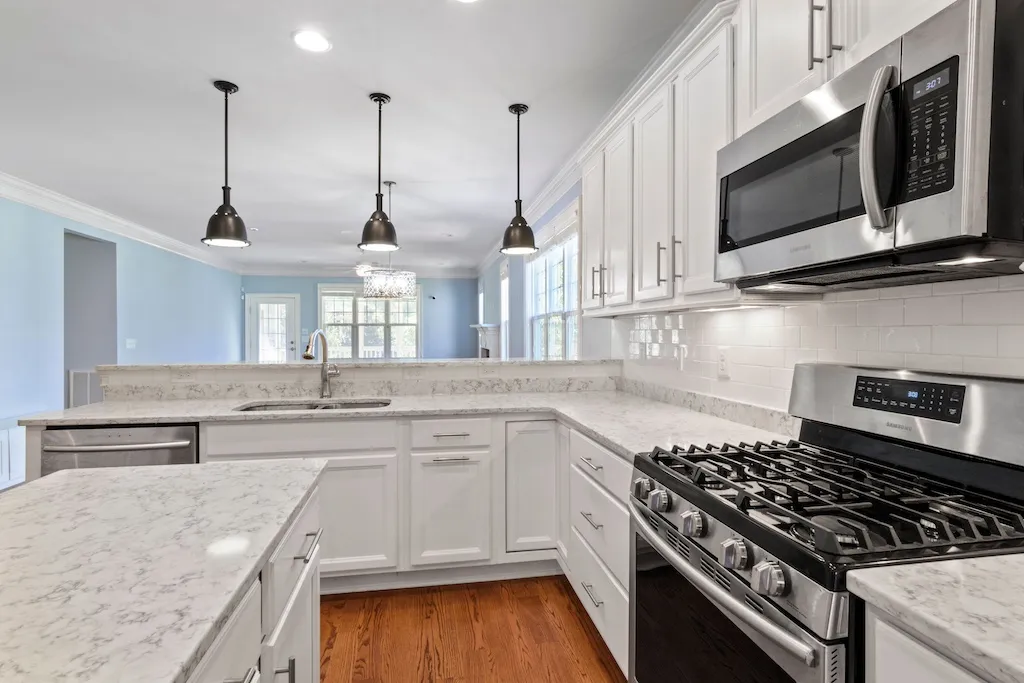
A kitchen remodel is one of the best things you can do for your home. It's also one of the easiest ways to bleed money if you go in without a plan. We've worked with plenty of homeowners who started out excited at Texan Home Additions, armed with a vague number and a Pinterest board, and then hit a wall somewhere around week three. That's exactly why a good kitchen remodel service in Houston earns its keep. Here's the part people don't expect: a beautiful, functional kitchen doesn't take an unlimited budget. It takes a thoughtful one.
So let's walk through how to plan a remodel that actually delivers, minus the financial panic.
Setting a Realistic Budget Before You Pick a Single Tile
How Much Should a Kitchen Remodel Actually Cost?
The honest answer is that it depends - on your kitchen's size, what you're hoping to achieve, and where you live. That said, a useful starting point is to set aside somewhere between 5% and 15% of your home's value . Push much past that and you'll usually find the extra spending doesn't come back to you when it's time to sell.
Before you settle on a figure, take a good look at what you're actually dealing with. Knowing how to plan a kitchen remodel starts here. Walk through the space and be honest about what needs replacing versus what just needs freshening up. A cabinet that's still solid but looks a little tired might only need new doors and hardware. No reason to rip out something that's perfectly sound.
Building in a Contingency Fund From Day One
No remodel goes exactly to plan. None. That's why we always tell people to keep 10-20% of their budget tucked away as a contingency fund. Once the walls open up, you might find water damage, ancient wiring, or plumbing that hasn't met code since the disco era. With a cushion in place, those surprises become annoyances rather than disasters.
Making Smart Design Choices That Maximize Your Investment
Prioritizing High-Impact Updates Over a Full Overhaul
One of the smartest moves you can make is figuring out which changes give you the biggest visual and functional payoff for the least money. New countertops , refreshed cabinet fronts, and good lighting can transform how a kitchen feels without anyone touching the bones of the room.
Keeping your existing layout helps enormously here. The moment you move a sink, shift the stove, or knock out a wall, you're into plumbing and electrical work - and that's where budgets tend to vanish. When planning a kitchen remodel , we'd suggest designing around the footprint you already have wherever it makes sense. Your wallet will thank you.
Choosing Materials That Balance Quality and Cost
Here's something worth remembering: not every surface needs to be the most expensive option on the showroom floor. Put your money into the things that take the most abuse - countertops and flooring - and go mid-range elsewhere. Quartz, for instance, is tough and good-looking, usually at a friendlier price than natural stone, which makes it a favorite for budget-minded projects.
Semi-custom cabinets work the same way. Pick the right finish and hardware, and most people couldn't tell them apart from the fully custom stuff. The difference shows up mainly on the invoice.
Deciding What You Can DIY and What Requires a Professional
Tasks That Are Genuinely Safe to Tackle Yourself
If you're handy and patient, there's real money to be saved doing some of the work yourself. As you plan a kitchen remodel, a few jobs fall safely into DIY territory:
- Painting walls and ceilings
- Installing a tile backsplash
- Swapping out cabinet hardware
- Assembling flat-pack furniture
None of these need a permit, and the risk is low as long as you take your time.
Work That Should Always Be Left to Licensed Professionals
Electrical, plumbing, and structural work, though? Leave those to the pros, full stop. Cutting corners here doesn't just threaten your budget - it threatens your house and the people in it. Unpermitted work also has a way of coming back to haunt you when you try to sell. If you're managing your own remodel, find trusted, licensed tradespeople. It's worth it.
The same rule covers gas lines and load-bearing walls. Fixing a mistake in those areas costs far more than you'd ever save by doing it yourself, so it's not really a gamble worth taking.
Enjoying Your New Kitchen Without the Financial Hangover
A well-planned kitchen earns its keep every single day - in the dinners you cook, the time you spend with the people you love, and the value it quietly adds to your home. The trick is going in with clear priorities, honest numbers, and a willingness to trade off here and there instead of chasing everything at once.
We've watched people pull off genuinely impressive results on modest budgets , mostly by staying focused on what mattered and making smart calls along the way. The best kitchen remodeling plans come from exactly that kind of thinking. If you're ready to start planning yours, we'd be glad to help you shape a scope and budget that fits your home and your life.
Frequently Asked Questions
Where Can I Make Savings Without Appearing Cheap?
The first place to look for savings is sticking to the existing configuration and choosing materials wisely. As long as plumbing and electricity remain in the same place, there won't be any hidden expenses eating away at the budget. Then, invest in surfaces that will attract more attention like counters, cabinets and quality lighting, while going for middle-of-the-road products elsewhere. Using semi-custom cabinetry, switching to quartz countertops and installing a backsplash by yourself will help reduce overall expenses without drawing suspicion.
Can I Remodel The Kitchen Incrementally In Order To Stretch The Budget?
Indeed, remodeling in steps is quite possible as well as an advisable tactic if your budget cannot cope with a complete makeover of the kitchen area right now. In this case, it's important to think through the entire process in advance but implement it partially. For instance, begin with items of daily utility such as changing countertops or installing new lighting fixtures and then proceed to the replacement of cabinets or laying of floors if the budget allows. Nevertheless, be careful with plumbing and electrical works, otherwise they may end up costing you twice.
How Long Will A Renovation Of My Kitchen Take?
Kitchen renovations usually last between 6 and 12 weeks, although it heavily depends on specifics of work and supply time for materials. An average cosmetic makeover, consisting in painting cabinets, installing a new hardware set and applying backsplashes can be completed within one or two weeks. Gutting and reconstruction with installation of new plumbing, electricity, layout change require more time.
Thinking about a remodel in the Manvel area?
Get a Free Consultation